
Into the Intuition of Movement
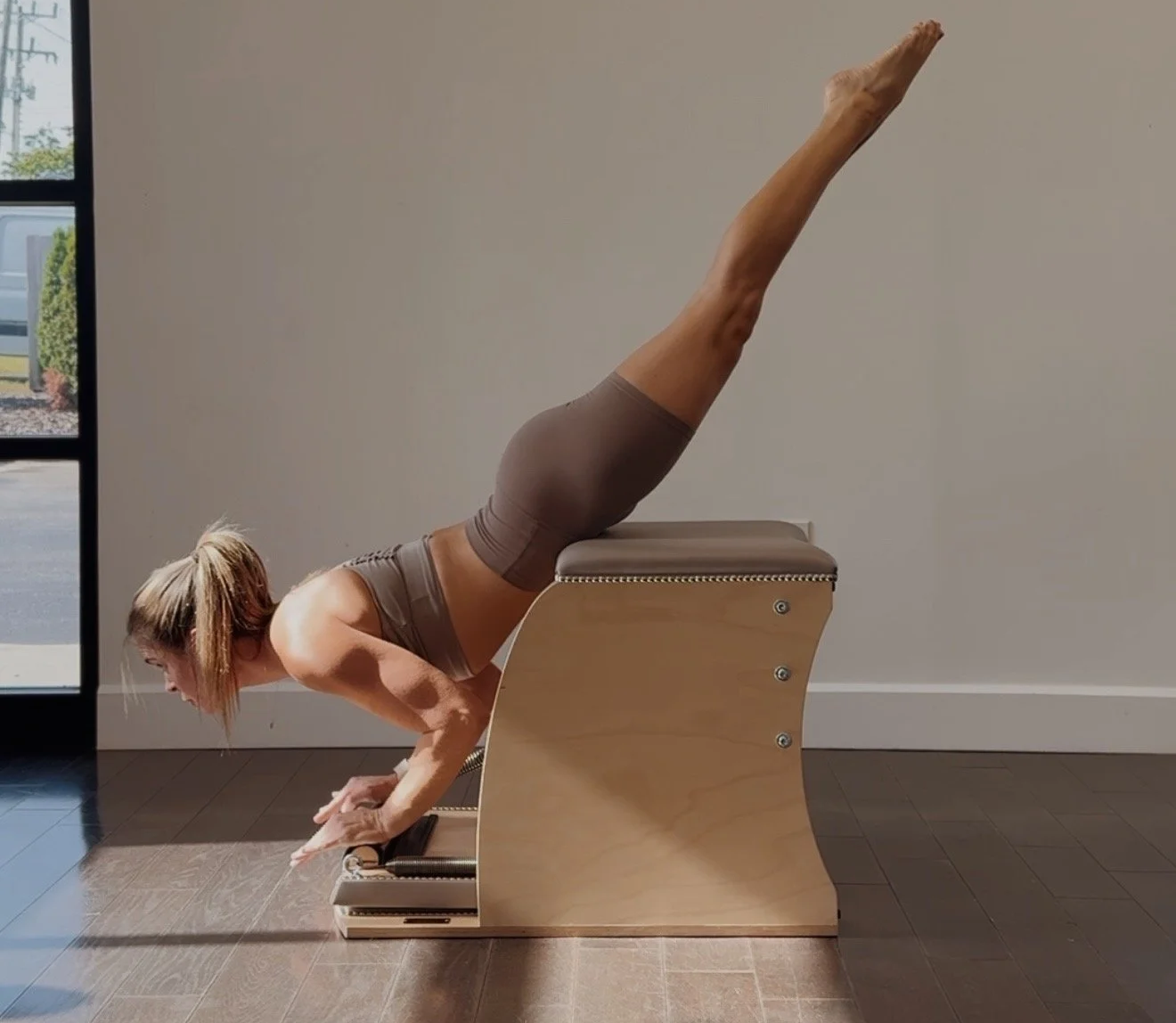
Something I've been noticing lately, in the studio and out in the wider Pilates world, is a kind of rigidity. Not in new clients walking through the door for the first time, and not just in those who come in braced for something unfamiliar. I'm talking about people who have been practicing for years. Clients who have put in real time on the apparatus. Instructors who have been teaching for years. And their movement is forced. Stiff. Cautious in a way that doesn't loosen over time the way it should. Like somewhere along the way a set of rules got handed down, and nobody told them that rules in Pilates, like rules in most things worth doing, are meant to be understood before they're transcended.
I watched two instructors at a conference recently, Miguel Silva and Mariano Dolgaray, and both of them taught on the same theme: flow. Moving in movement. Not moving through a checklist of positions, but actually inhabiting the transition, letting one thing lead to the next. Watching them was a reminder of what this method can look like when it's fully alive.
It made me want to write about how we get there.
Rules Are the Beginning, Not the Destination
When someone starts Pilates, rules matter enormously. You need to understand what moves and what doesn't. What the pelvis is doing, what the spine is doing, where the shoulder is in relation to the rest. These are not arbitrary constraints. They're the architecture. You have to know the building before you can move freely inside it.
But at some point, if the rules never loosen, something goes wrong. The student stops feeling the movement and starts performing it. They're executing shapes instead of discovering what the body is actually trying to do. The work becomes a series of positions to hit rather than a conversation to have.
That's the rigidity I keep seeing. And it concerns me, because it's the opposite of what Pilates is for.
Tension as a Teacher
Here's a shift that changes everything: stop fighting the resistance and start listening to it.
The reformer is a system of support. The springs don't just push back against you. They hold you, guide you, give you information. Think of tension rods in a shower, or the suspension cables of a bridge. The tension isn't the obstacle. It's what makes the whole structure possible. When you work with it instead of against it, the movement stops being effortful in the wrong way and starts being effortful in the right way.
The same principle lives in your own body. Tension in a muscle isn't always something to release or override. Sometimes it's telling you where the movement wants to go next. Learning to read that, to let tension be a teacher rather than something to conquer, is one of the deeper skills Pilates develops. But only if you're paying attention.
The Mat Is Where You Find Yourself
The equipment is extraordinary. The reformer, the Cadillac, the chair, all of it exists to support the body, to give it feedback it might not find on its own, to create conditions where the right movement becomes easier to access.
But the mat is where you find out what you've actually learned.
On the mat there are no springs, no moving carriage, no straps to lean into. There's just you and gravity and whatever understanding you've built in your body over time. If the equipment work has been absorbed, the mat reveals it. If it's only been performed, the mat reveals that too.
This is why the mat is not a simplified version of Pilates. It's the integration test. It's where the body has to produce, from the inside, what the apparatus has been helping you find from the outside.
Movement as Exploration
What I want for every client, and honestly for every instructor, is a practice that includes curiosity.
Not every session needs to be a performance of technique. Some of the most valuable work happens when you slow down inside an exercise and actually ask: what is this doing? What happens if I let this edge of tension guide me instead of pushing through it? What does this movement feel like when I stop trying to make it look right and just let it be what it is?
The blocks and segments we learn in the beginning, the careful isolations, the deliberate separations of what moves from what doesn't, those are tools. They are not the goal. The goal is movement that is integrated, responsive, and alive in the body. Movement that doesn't stay in the studio but starts to show up in how you walk, how you sit, how you reach for something on a shelf or catch yourself before you fall.
That's when Pilates has done its real work. Not when you can execute the exercise correctly, but when the intelligence of the exercise has become part of how you move through your life.
How to Start Moving This Way
If any of this resonates, here's what I'd offer:
Stop trying to be correct and start trying to feel. Correct follows feeling, not the other way around.
Spend time on the mat. Not as a warmup or a backup when equipment isn't available, but as a practice in its own right. Let it show you what's been integrated and what still lives only in the form of borrowed support.
Get curious about transitions. The place between exercises is not dead space. It's often where the most honest movement happens, before the performance kicks back in.
And if you work with an instructor, find one who is still exploring themselves. A teacher who has stopped being curious about their own movement has very little curiosity left to offer you.
The intuition of movement is not a talent some people have and others don't. It's something that gets uncovered, slowly, through practice that takes the rules seriously and then has the courage to move beyond them.
That's the Pilates I believe in. That's the Pilates I'm still learning.
Authentic Pilates NC — 601 W. Smith Street, Greensboro, NC 27408helloauthenticpilates@gmail.com | 336-202-2365